Managing Freelancers and Contractors on ARTISH
Bringing on freelancers and contractors is a core part of how creative work gets done — whether you are a boutique agency pulling in a specialist for a campaign, a game studio contracting a sound designer for a single title, or a university project team hiring an external developer to build out a prototype. But managing the logistics around external collaborators often means juggling separate tools for project setup, communication, invoicing, and payments. ARTISH consolidates all of that into a single flow that works the same way whether you are managing an internal team member or an external collaborator.
The result is a system that scales to fit the context, from a two-person creative collective onboarding their first paid contractor, to an in-house digital studio inside a large enterprise managing dozens of concurrent external engagements.
Creating a Contractor Project
The contractor project creation flow follows the same structure as any other project on ARTISH, with a few key additions designed for external collaborators. When setting up a contractor project, you define the scope and deliverables just like a standard project, but you also choose a payment structure.
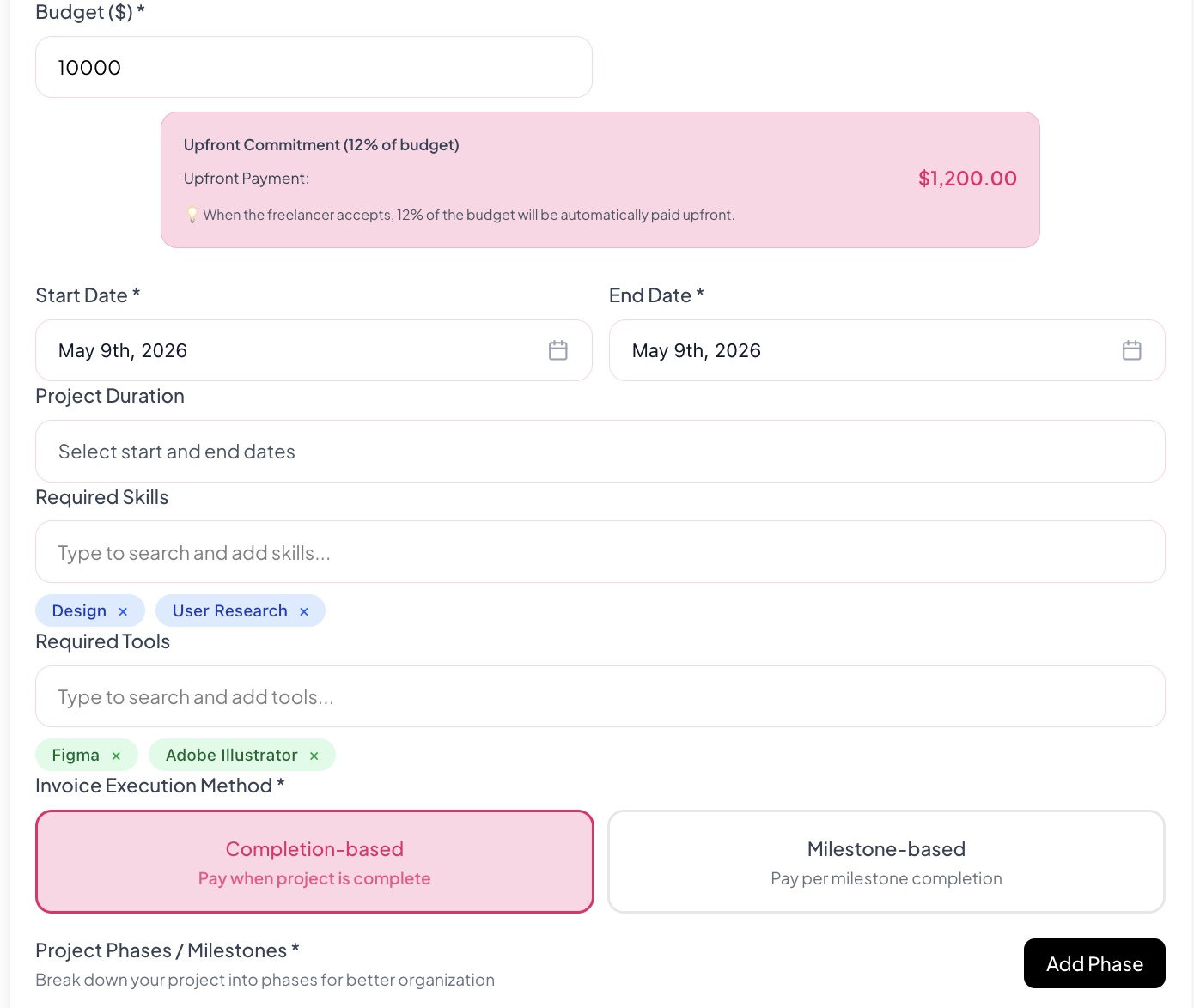
ARTISH supports two models: milestone-based and completion-based.
With milestone-based, you break the project into phases, each with its own deliverable and payment amount. Invoices are generated as each milestone is completed and approved. This model works well for longer engagements where work is delivered incrementally: a media production team commissioning a composer across pre-production, production, and post; an event planning agency working with a designer across concept, revision, and final delivery; or an agency managing a multi-phase brand rollout with a freelance strategist.
With completion-based, 12% of the total project budget is released to the collaborator upfront when the project kicks off, with the remaining balance triggered as a single payment when the entire project is marked as done. This model suits shorter, more defined scopes, such as a digital studio commissioning a one-off illustration, a creative collective contracting a copywriter for a single campaign asset, or a university team paying an external consultant for a focused deliverable.
Either way, you define a budget upfront so the collaborator knows exactly what they are working toward. Once configured, the project appears as a standard project tracker for day-to-day management.
Invoicing and Payments
Once work is delivered and approved, invoicing happens directly within ARTISH. There is no need to switch to a separate billing tool or chase down spreadsheets. Projects can be configured to autopay invoices when milestones are approved, or project owners can manually trigger payment for invoicable work when they are ready.
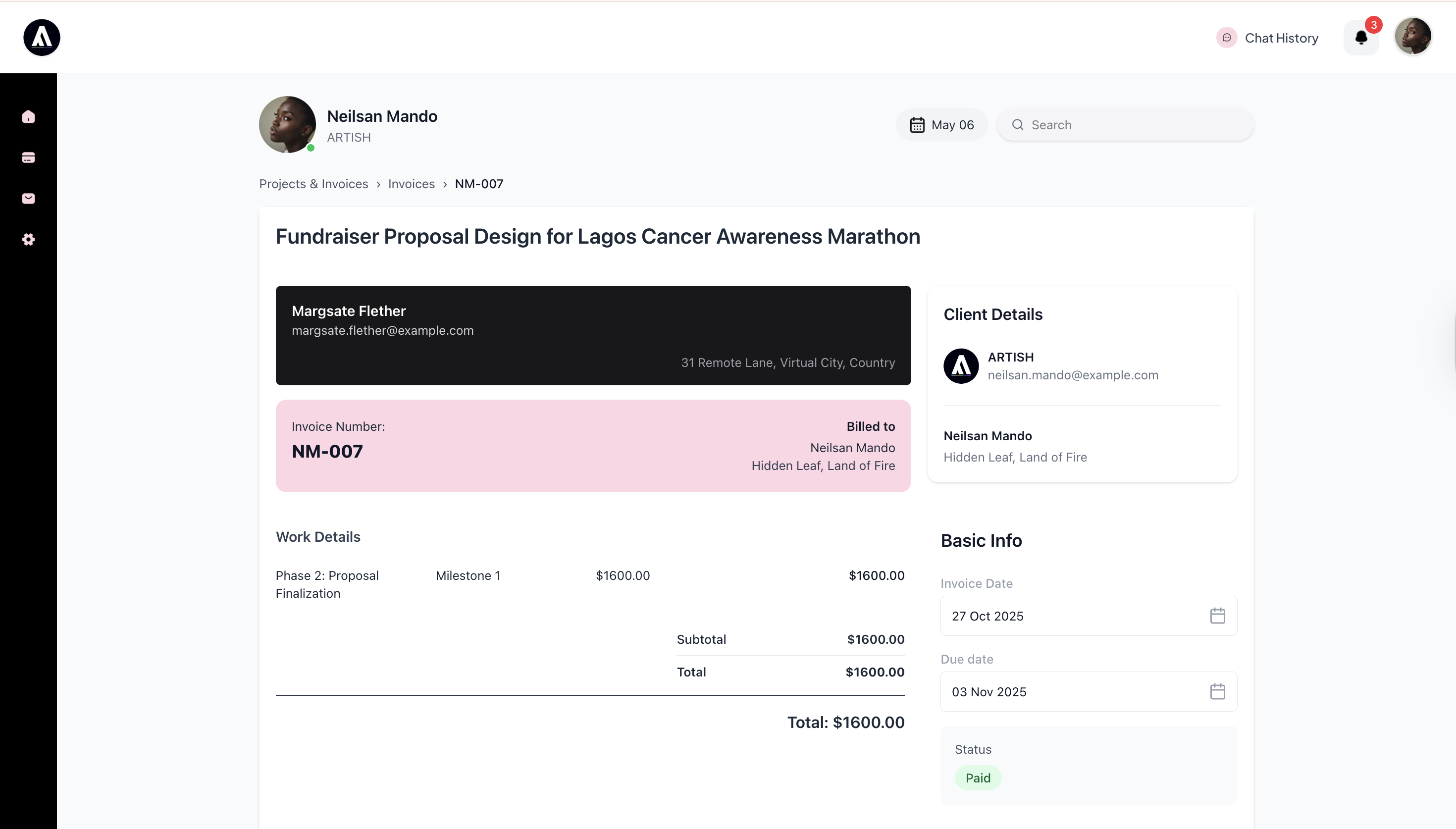
This matters most in high-volume or fast-moving environments. A creative agency running ten concurrent contractor engagements cannot afford to manually reconcile invoices across email threads and PDFs. An enterprise creative team operating under procurement constraints needs a clear paper trail. A game studio juggling contractors across art, audio, narrative, and QA needs payment status to be visible at a glance without a dedicated finance resource to manage it.
All invoices are accessible from one centralized list, so you always know what has been paid, what is pending, and what is overdue. If a payment is delayed or fails for any reason on the sender's side, ARTISH lets you send reminders directly from the platform, keeping the process transparent without awkward email chains.
Invoice List
The invoice list gives you a bird's-eye view of all contractor payments, past, pending, and upcoming. You can filter by status, see which projects each invoice is tied to, and track payment history for every collaborator you work with. It is the financial layer that sits on top of your project management, keeping money and work aligned.
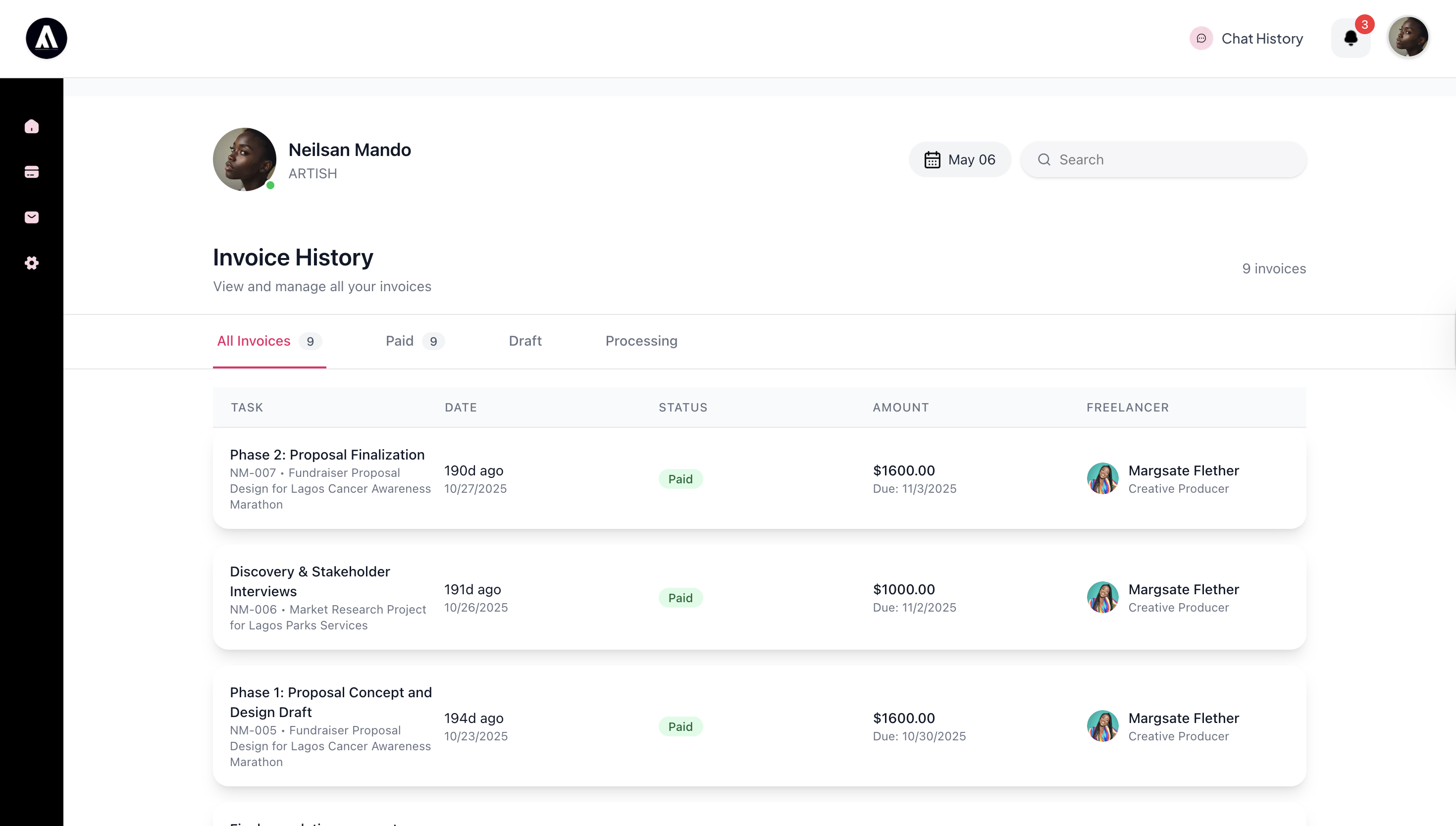
For teams that work with contractors repeatedly, such as a media production house with a stable of go-to freelancers, an event agency with preferred vendors, or a digital studio with a rotating roster of specialists, the invoice list becomes a running record of every financial relationship, not just a snapshot of what is currently active. That history matters when you are deciding who to bring back, assessing contractor reliability, or simply answering the question: have we paid everyone?