
Afropop, by definition, resists a lot of world-building music conventions. It's a genre focused on the here and now, on delaying the future by squeezing every ounce of pleasure out of the brief wink in which we exist. That sense of urgency is heightened by the dysfunction of its originating cities, the chaos of daily life, the constant unease that must be negotiated. It's music that wants you to remember things vividly, heighten every sensation, chase every adrenaline high, and remind yourself to live while the future is still uncertain.
As more African artists follow the gold rush of ‘Africa to the World’ and head West, the big question of what contemporary Afropop contributes to the musical canon and who gets to define it becomes even more pertinent. The streaming era collapsed the cultural and geographical barriers that once kept music and influences regional, but the money and influence remain domiciled in the West, and its extractive systems and the West expects brutalist realism of poverty or fantastical depictions of black nobility from music from the continent (looking at you Black Is King). Every music artist from the global south who seeks to access that wealth is expected to transcend the stereotypes associated with their country of origin while maintaining an authentic connection to its culture.
All the great Afropop songs tap into this very specific need, alchemise this pocket of stolen euphoria. But artists in the genre struggle to transmute this specific feeling into cohesive projects with universal appeal, big and ambitious enough to challenge the status quo and redefine the genre for a global audience. The few contemporary artists who have managed to break through in this way are: Wizkid, Burna Boy, Rema; all of whose music still tethers on the edges of sonic stylistic quirks the world has come to expect from the Afro-diaspora.
The emergence of Tyla however, has presented an interesting shake-up.
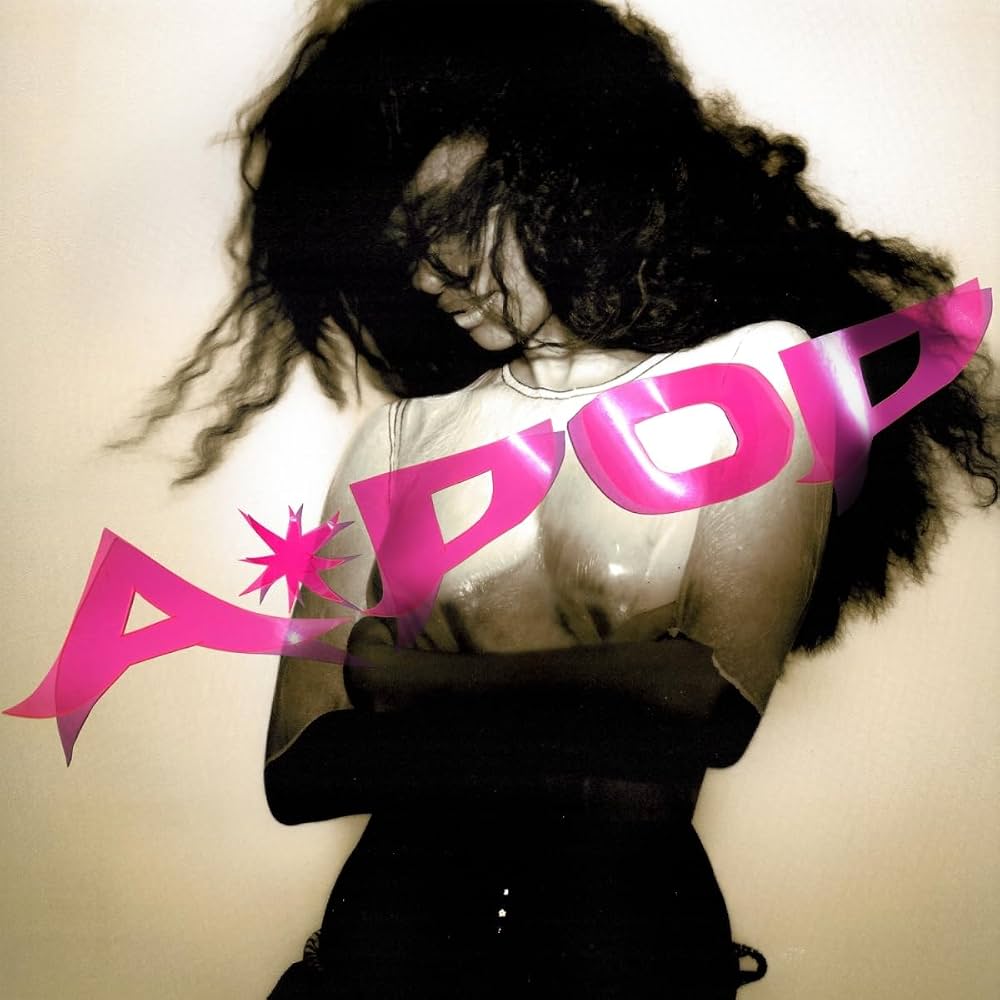
Her self-titled album introduced Tyla the artist, functioning as a résumé of her many talents & a play for genre supremacy. Two back-to-back Grammys from that era validated that first ambitious salvo and gave her the runway to experiment further, reach deeper. She does with A*Pop; a defiant sophomore album that claims pop as her playground and demonstrates her mastery of its secrets.

A DISTINCT SOUND
On A*Pop, Tyla distils what it feels like to come of age as an African woman in a world where the rules of romance are in flux. Dodgy chat rooms and manipulative dating apps slowly enmesh with the seedy bars and gaudy nightclubs of our youth. Your date doesn’t end with a polite goodbye or an invitation for a nightcap; they also Google you and follow you on Instagram. Surveillance permeates every sphere of existence, and the fear of incidental humiliation cripples.
A*Pop examines these contradictions: being exposed to the world and its pleasures, yet punished for trying to indulge, bombarded with propaganda of perfect love, yet only experiencing dysfunction in relationships. She sings of what it feels like to balance mercy and retribution in a world where privacy is a myth and the ‘internet’ never forgets, to crave connection but dread commitment.
Instead of a fictional universe, Tyla raises altars to the femme, exalting her position as the lover’s muse and lamenting her fate as the object of lust. Each song on the album is a meticulously constructed diorama so symbolically resonant it suspends reality, conjuring the euphoria of sweaty dancehalls, ambient garden bars, humid poolside hotel lounges, claustrophobic roadside joints and feverish Pentecostal worship services where repressed lust stirs in mouths once muted by shame and pride.
These worlds are connected by a motif of guttural bass riffs, percussive synths and twangy guitar work that harken to a rich musical legacy that includes Amapiano, Highlife, Soukous, Makossa, Afrohouse, Fuji and Amharic Funk. It is the buttress that connects these altars, a rhythmic tradition that transmutes the longing of session musicians and tribute bands into a heady mood that emboldens pregnant gazes, lustful propositions and wandering hands. Tyla croons into this decadent haze, giving voice to the half-heard exchanges that happen in these heady, disorienting pits of hedonism where the damned and divine mingle.
A*Pop is littered with reminders that pleasure is transient, and consequences await just shy of the moment. The world burns, scandal is afoot, danger lurks in corners waiting for a moment of weakness to pounce. This is not a place for innocence, anxiety, or doubt. To work these rooms, you need blistering courage or unshakeable confidence. Our protagonist tempts fate, seeking out pleasure even as it threatens to consume her. She schemes, taunts dangerous men, mocks their ham-fisted attempts to gain her attention, brags about her wealth, flaunts her beauty, demands material worship. When she does love, she throws herself at the object of her devotion, puts herself at his mercy. She welcomes what may come, as long as it meets her in a moment of delirious self-satisfaction.

The femme these altars have been raised to deify is a very specific kind of grown and sexy; a thrill-seeking, silver-tongued brat who wields her wit and sensuality with the precision of a honey trap. She is weary from her dealings with a world that seeks to punish her for being articulate and, dare I say, snobby. But she is not immune to the hold of desire, so like a temptress in a Cape Town noir novel who is fridged in the first few paragraphs but continues to haunt the plot and its characters, she flirts, taunts, demurs, endures.
Instead of a restrictive narrative, we get a mood map Tyla trusts us to feel our way through. Some songs are claustrophobically intimate, others emotionally distant. Each song is succinct enough to show what emotions our protagonist indulges in and what feelings she tries to repress. We feel this most acutely in the soaring high of juvenile infatuation in ‘Fairytale’, the album's most earnest song. It is the only cover on the album, and the song’s original composers, Liquideep, feature for extra authenticity. This comes with its own lore, one of the first Deep House songs to attain global virality. Her version is sickly sweet, substituting the original song’s sleazy earnestness for a saccharine declaration of undying love. It is a loss-of-innocence song, one of the few times where guilt and remorse are explored on the album. The girl realises that desire compels her to demonstrate love through surrender, and her attempts to subvert this compulsion have led to collateral damage. Our usually mouthy protagonist speaks plainly, accepts blame, followed by lofty promises. It’s a rare moment of vulnerability on a project drenched in bravado.
There is rage, simmering like a dormant volcano across the album. At every turn, the femme is forced to assert herself, draw boundaries, negotiate access. She doesn't care about the grandness of gestures, the fervour of feelings. It all matters naught to her if there is no respect. She hedges her bets on songs like ‘Chanel’ and ‘Is it’, masks her feelings in ‘Crazy of Me’, hurts before she is hurt on ‘Mr Nonchalant’ and the album's opener ‘Is it, Love?’ When she moves on, in the muted climax of ‘I Don’t Care’, she expects to be left alone, believed, and have her wishes respected. She asks on the album’s closer ‘Hot Tubs’, ‘am I not allowed?’, ‘am I not deserving?’
ONE OF ONE
One could argue that there is no definitive Afropop album that explores how an African woman pursues hedonism, insists on her worth, and negotiates her place in a dystopian hellscape. This is the vacuum that Tyla attempts to fill with A*Pop. It is a herculean task, especially for a young African pop star contending with the weight of deigning to codify the experiences of a generation of women reconciling their analogue fantasies with living and loving in a digital dystopia.
A measure of how successful she has been at merging musicality, mystique and storytelling is ‘That Girl’. It achieves a level of pop perfection that elevates it across genres, perfectly balancing genre conventions with wild experimentation. It pays homage to the nostalgic bashment sounds of the early 2000s without crossing into appropriation, and is bold enough to bring back the false hook, pre-chorus and bridge which is both perfect for TikTok soundbites without sounding formulaic. It is sexy, irreverent, self-aware.
The last ‘young’ African pop star to reach similar levels of zeitgeist-defining virtuosic genius is Brenda Fassie. Her career-defining albums have the same confessional style storytelling, the complicated perspectives, the same vitriol fuelled by the expectations being foisted on her, a visible woman in a culture that preyed on women. Her music exemplified politics, a manifesto of songs that insisted on the radicalising power of telling stories of women being wrong, broken, vengeful & hedonistic. The toll on her life and psyche was brutal, but for a few prime years, the entire world was in her thrall. The closest Nigerian pop has gotten to this is indie darling Niniola, whose Afrohouse catalogue is as sacred as it is vulgar, and Temi Dollface's brief but impactful run, which redefined the boundaries of pop in Nigeria.
Tyla seems to have studied the greats and moves with the same certainty that distinguished their careers. She is also navigating the controversies that come with global acclaim with a levity that polarises fans and critics alike. But the music and the intent behind it are unassailable, and that is the only non-negotiable for an artist intent on longevity.
Tyla has done her part with A*Pop, but without devotees, an altar is only a relic, an offering to tempt the goddess to return and inhabit her domain once more. I believe that this album has enough genius to become a generational pilgrimage, and these altars will have many visitors who return to it regularly, hoping for an encounter with something otherworldly, a glimpse of themselves in the divine.